
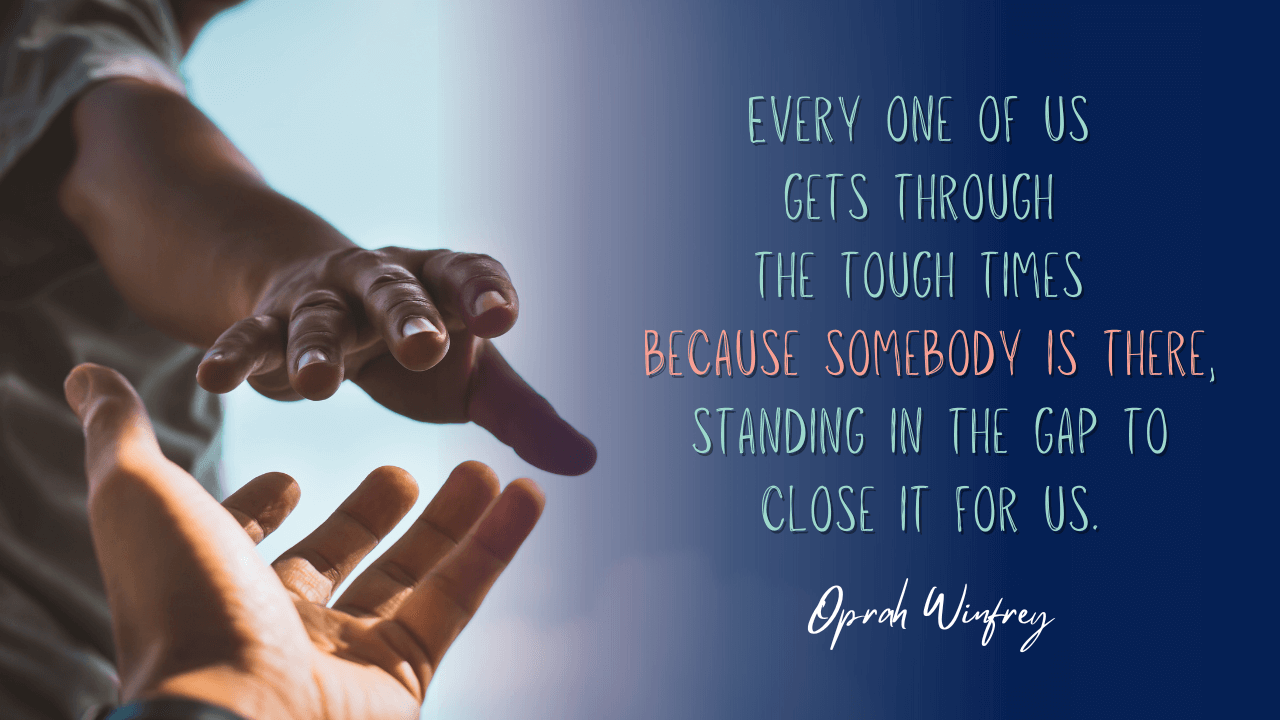
In our society, vulnerability is often viewed as a weakness. We've been conditioned to hide our flaws, to keep our struggles to ourselves, and to always maintain a façade of strength and invincibility. But what if I told you that it's actually the complete opposite? That true strength lies in our ability to embrace vulnerability.
Vulnerability is the birthplace of authenticity, innovation, and change. It's where we find our most human selves, stripped of all pretence and armour. It's scary, yes, but it's also liberating. Embracing vulnerability means letting go of our need for control and perfection, and instead, embracing our imperfect, messy, human selves.
But how does one embrace vulnerability? And how does this link to asking for help? Sit tight, because we're about to dive into the fascinating world of vulnerability and strength, and discover how they interconnect in ways you might not have expected.
Understanding the Concept of Strength from Vulnerability
Strength from vulnerability is not a concept that we often come across. We are so used to associating strength with invulnerability, with being unshakeable and impenetrable. But this is not what true strength is. True strength is not about being impervious to pain or struggle. It's not about never needing help or always being able to handle things on your own.
True strength comes from vulnerability, from the courage to admit that we don't have all the answers, that we're not always okay, and that sometimes, we need help. It's about having the humility to acknowledge our limitations and the bravery to reach out to others when we're struggling.
Strength from vulnerability is about resilience. It's about picking ourselves up after we've fallen and learning from our mistakes. It's about persevering in the face of adversity and never losing sight of our worth, even when we're at our lowest.
Why is it Difficult to Ask for Help?
Asking for help is difficult, and there are several reasons why this is the case. For starters, we are afraid of appearing weak or incompetent. We live in a society that prizes self-reliance and independence, and so, asking for help can seem like a failure or a sign of inadequacy.
Additionally, we fear rejection. We worry that if we ask for help, we might be turned away or ridiculed. This fear of rejection can be so powerful that it can prevent us from reaching out even when we desperately need assistance.
Lastly, we are afraid of being a burden. We don't want to impose on others or make them feel obligated to help us. We worry about being seen as needy or clingy, and so, we keep our struggles to ourselves and try to cope on our own.
The Misconceptions about Vulnerability and Strength
There are many misconceptions about vulnerability and strength. One of the most common is the idea that vulnerability is a sign of weakness. This could not be further from the truth. Vulnerability is not about weakness; it's about courage. It's about having the guts to show up and be seen, even when we're scared and uncertain.
Another misconception is the notion that strength means never needing help. This is a harmful and unrealistic expectation. We all need help sometimes. Asking for help doesn't mean we're weak or incapable; it means we're human.
A third misconception is the belief that vulnerability and strength are mutually exclusive. This is simply not the case. Vulnerability and strength are two sides of the same coin. You can't truly be strong without being vulnerable, and you can't truly be vulnerable without being strong.
How Asking for Help Demonstrates Strength
Asking for help is not a sign of weakness; it's a sign of strength. It takes courage to admit that we can't do everything on our own, and it takes humility to reach out to others. Asking for help means acknowledging our limitations and taking steps to overcome them. It's a proactive, solution-oriented approach that demonstrates resilience and determination.
Moreover, asking for help shows emotional intelligence. It shows that we are aware of our feelings and needs, and that we're not afraid to express them. It shows that we value our mental health and wellbeing enough to seek support when we need it.
Lastly, asking for help fosters connection. It allows others to step in and lend a hand, strengthening our relationships and fostering a sense of community. It reminds us that we're not alone, and that we're all in this together.
The Connection between Inner Strength and Vulnerability
Inner strength and vulnerability are deeply interconnected. Inner strength is not about being tough or unemotional; it's about having the courage to face our feelings, even when they're uncomfortable or painful. It's about being authentic and true to ourselves, even when it's scary or risky.
Vulnerability, on the other hand, is about openness and transparency. It's about letting others see our true selves, warts and all. It's about being brave enough to show our weaknesses and admit our mistakes.
When we embrace vulnerability, we tap into our inner strength. We learn to navigate our emotions, to cope with adversity, and to lean on others when we need support. We become more resilient, more empathetic, and more connected.
How to Embrace Vulnerability and Ask for Help
Embracing vulnerability and asking for help is not easy, but it's absolutely crucial for our wellbeing and growth. Here are some steps to help you get started:
- Acknowledge your feelings - Don't try to suppress or ignore them. Allow yourself to feel whatever you're feeling, without judgment or criticism.
- Practice self-compassion - Be kind to yourself, especially when you're struggling. Remember that it's okay to not be okay, and that you're doing the best you can.
- Reach out to others - Share your feelings with someone you trust, and ask for their support. Remember, asking for help is not a sign of weakness; it's a sign of strength.
- Celebrate your courage - Embracing vulnerability and asking for help takes guts. Be proud of yourself for taking these steps, and for having the courage to be authentically you.
The Positive Impacts of Embracing Vulnerability
Embracing vulnerability can have numerous positive impacts on our lives. It can foster deeper connections with others, as we open up and allow them to see our true selves. It can boost our self-esteem and self-compassion, as we learn to accept and love ourselves, flaws and all.
Additionally, embracing vulnerability can enhance our resilience. As we navigate our feelings and cope with adversity, we become stronger and more capable. We learn to bounce back from setbacks and to persevere in the face of challenges.
Lastly, embracing vulnerability can lead to greater creativity and innovation. As we let go of our fear of failure and judgment, we become more open to new ideas and perspectives. We become more willing to take risks and to explore uncharted territory.
Real-life Examples of Strength from Vulnerability
There are countless real-life examples of strength from vulnerability.
Born without arms and legs, Nick Vujicic faced tremendous challenges growing up, including bullying and feelings of worthlessness. However, he embraced his vulnerability and turned it into strength, becoming an international motivational speaker and inspiring people to overcome adversity with courage and hope.
From a challenging upbringing marked by poverty and abuse, Oprah Winfrey (The Biography of Oprah Winfrey) emerged as a media mogul and philanthropist, becoming one of the most influential figures in the world. She openly shares her personal struggles and vulnerabilities, using her platform to inspire others to find their inner strength, overcome obstacles, and make a positive impact on their lives and the lives of others. Oprah's journey exemplifies the transformative power of embracing vulnerability and how it can lead to resilience, personal growth, and authentic connections.
These stories are powerful reminders of the strength that comes from vulnerability. They show us that it's okay to struggle, to fail, and to ask for help. They remind us that our worth is not defined by our success or our failures, but by our courage to keep going, even when the odds are against us.
Conclusion: Embracing Vulnerability as a Path to Inner Strength
In conclusion, embracing vulnerability is not a sign of weakness; it's a sign of strength. It's a path to inner strength, authenticity, and connection. It's a way to foster resilience, creativity, and growth.
So, let's start embracing vulnerability.
Let's start asking for help.
Let's start showing our true selves, without fear or shame.
Let's be brave, let's be vulnerable, and let's be strong.
Because remember, vulnerability is not just strength ? it's superpower.
So, the next time you find yourself in a situation where you need help, don't hesitate to ask. It's not a sign of weakness, but a testament to your strength. And remember, we're all in this together. So, let's support each other, help each other, and grow together. Because together, we're stronger.
Remember, it's okay to embrace vulnerability, and it's okay to ask for help.
Because in doing so, we're not just showing our strength; we're also fostering a sense of empathy and understanding that can bring us closer together as a community. So, let's start embracing vulnerability and asking for help, because together, we can make a difference.