
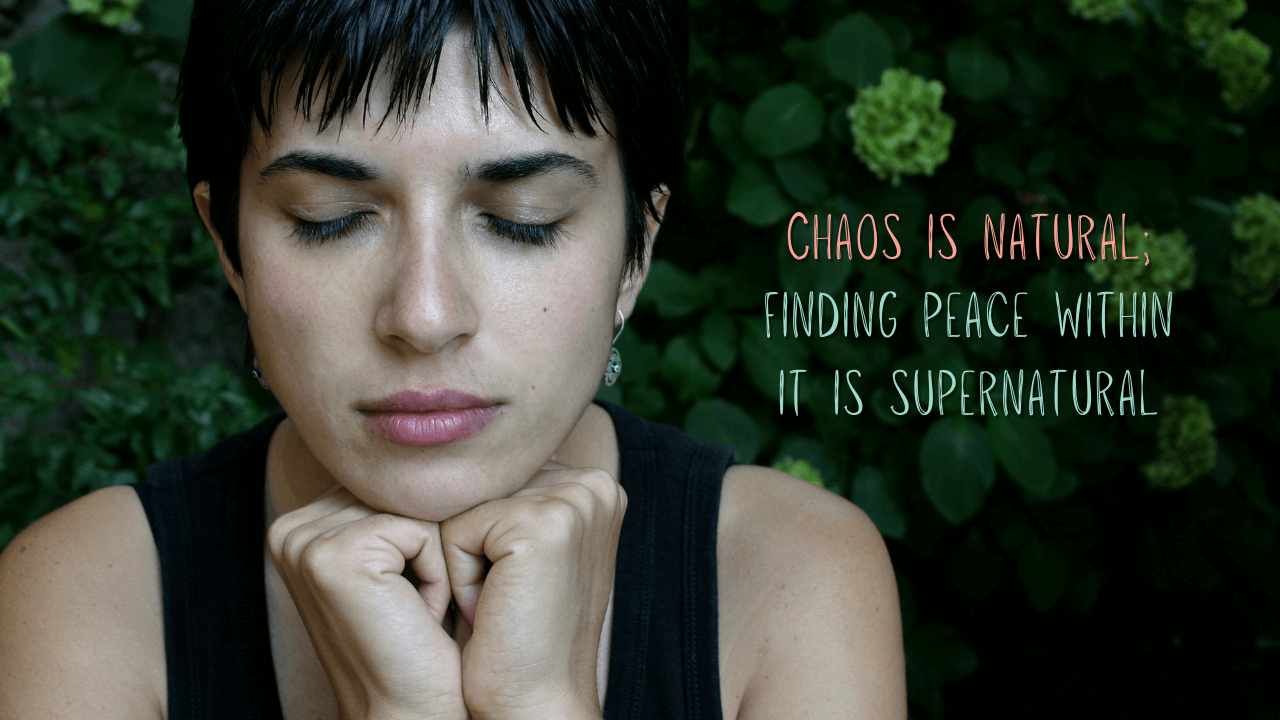
Do you feel overwhelmed, stressed, and unsure about the future?
You are not alone. While everyone experiences stress from time to time, when stress levels stay high for a long period, serious health consequences can result.
If you are experiencing stress and chaos in your life, it?s important to identify the causes and take steps to lower your stress level, take care of yourself, and build strength and resilience going forward.
Finding peace in the chaos can be challenging, but it's important to identify the causes of stress and take steps to lower your stress levels.
Read on to learn more about the physical impact of stress, and simple practices you can adopt to help you cope better.
The Emotional and Physical Toll of Stress
The 2022 Gallup Global Emotions Report found that the world was a slightly sadder, more worried and more stressed-out place than it was in 2021. Four in 10 adults said they experienced a lot of worry (42%) or stress (41%), and slightly more than three in 10 experienced a lot of physical pain (31%). More than one in four experienced sadness (28%) and slightly fewer experienced anger (23%). The report also found that the world was a slightly less happy place in 2022 than it was in 2021. Only 59% of adults said they felt happy the day before the survey, down from 62% in 2021.
The report's authors say that the decline in positive experiences and the increase in negative experiences can be attributed to a number of factors, including the COVID-19 pandemic, the war in Ukraine, and the economic recession.
Both stress and loneliness can contribute to more serious mood disorders, including depression and anxiety. Rates of anxiety are growing, and it?s worse for children than adults.
In the short term, stress can cause headaches, muscle pain, digestive problems, trouble sleeping, and a lowered immune system. Stress can also worsen asthma, arthritis, and skin problems such as acne, eczema, and psoriasis. In the long term, stress increases the risk of heart disease, stroke, diabetes, and dementia.
If thinking about the negative effects of stress is increasing your stress levels, that?s normal. Fortunately, stress, while serious, can be managed. Stress reduction starts with simple self-care such as getting enough sleep, exercise, healthy food, and connecting meaningfully with others. Once you have the basics down, soothing practices such as meditation, connecting with nature, and practicing gratitude will help you build the internal resources to keep your calm, no matter what life throws at you.
Identifying What Makes You Worried and Stressed
In small doses, stress can be healthy and inspiring. When you stare down a difficult run on the ski hill, wait behind the curtain before you step out to give a speech, or walk into a new job for a first time, the butterflies you feel in your stomach are caused by stress. A little stress fires us up and gets us ready meet new challenges head-on.
Unfortunately, too much stress has the opposite effect, and can result in serious health consequences, as discussed above.
Humans tend to feel stress any time we experience change or loss. Common sources of stress including negative events, such the loss of a friend or family member, a serious health problem, a traumatic event such as a crime or natural disaster, or financial difficulties. Positive events such as starting a new job, getting married, or moving homes can also be very stressful because these events involve both the uncertainty of new situations, and the loss of the familiar.
Work and school are major sources of stress for Americans, with 40% of Americans experiencing stress at work, and 80% of college students saying that they feel stress sometimes or often. Stress at work and at school can have many causes, and many are similar: worries about performance, interpersonal struggles with colleagues and bosses (or fellow students and teachers), financial worries, and overwhelm from too much to do and too little time to do it.
Worry about the news and world events, as well as the personal effects that larger forces may have, are also major sources of stress. For people in marginalized and minority communities, worries about the news may be more urgent: these groups are more likely to be affected in difficult economic times, and are likely to experience more negative effects from climate change and pollution.
Whatever the cause of your stress, it can be managed. Simple self-care strategies can help you manage stress and perform at your best. In addition to following the self-care suggestions laid out in the next section, consider talking to a therapist or a life coach about your specific stressors. These experts can help you navigate your specific situation and teach you coping skills that are tailored to your own strengths and weaknesses.
If you are in serious distress, speak to your doctor. There are many treatments that can help manage the negative effects of stress on your body, and help you feel better soon.
Finding Peace in the Chaos
Finding peace in the chaos is not always easy, but there are many relaxation techniques that can help you achieve calmness and control. However, the foundation of our overall health and well-being is built upon four simple practices: sleeping well, exercising, eating well, and forging meaningful connections with others. If you haven't mastered these four aspects of your life yet, it's important to prioritize them in order to achieve a greater sense of balance and inner peace.
1. Sleep
Adults need around seven to nine hours of sleep each night, teens need eight to ten, and school-aged children need nine to eleven. Sleep is essential for our health, mood, and cognitive function. A lack of sleep increases your risks of high blood pressure, heart disease, diabetes, obesity, mood disorders, and dementia.
In addition to the long-term effects, a lack of sleep lowers your productivity and reaction speed to a similar degree as alcohol. Studies show that after 17-19 hours without sleep, driving ability is impacted as much as a blood alcohol level of 0.05, the legal limit in many places. It?s simply impossible to perform well when you are overtired.
If you aren?t getting enough sleep, getting more should be your number one priority. Without enough rest, it?s impossible to relax and find calmness in your life. To improve your sleep:
- Try to go to bed and wake up at the same time each day
- Keep your bedroom temperature between 60 and 67°F (15-19°C)
- Stop using screens, electronics or TVs for an hour before bed
- Develop a soothing night-time ritual, such as reading a book, taking a bath, or sipping chamomile tea
- Consult your doctor if sleep problems persist. There are many techniques that can help you get a better night?s sleep.
2. Exercise
When you are stressed, your body prepares for physical battle. This is known as the ?fight or flight? response, and it occurs when your body releases stress chemicals, including cortisol and adrenaline, in response to a stressor. These chemicals help us fight our enemies, but if they circulate in our blood stream for too long, they can cause inflammation and a variety of health problems.
Fortunately, any kind of exercise or physical activity helps your body burn off stress chemicals and return to a relaxed state. In addition to lowering your stress levels, getting enough movement in your day helps keep your weight steady; lowers your risk of heart disease, blood pressure, and diabetes; strengthens your bones and muscles; improves your mood; and keeps your brain and memory sharp as you age.
If you don?t yet get 150 minutes of moderate activity each week, start moving today! Whether you walk, run, bike, swim, dance, garden, or just play with the dog, the activity doesn?t matter as long you get your heart pumping. The key to sticking with an exercise plan is finding something you enjoy doing. If 20-30 minutes is too much right now, just do what you can. Even a couple of minutes is better than nothing ? every bit counts!
3. Eating Well
What we eat dramatically affects our health, mood, and cognitive function. A poor diet raises your risks of diabetes, heart disease, stroke, some types of cancer, and dementia. In contrast, eating well helps keep us healthy and combats the effects of stress on our body.
Yet, globally, only 44% of adults meet the recommended intake of fruits and vegetables. This means that more than half of the world's population is not getting enough of these essential nutrients.
Simply by adding a serving of vegetables and a piece of fruit to each meal, most of us would feel a big improvement in our health, energy, and wellbeing.
Even though ? or maybe because ? we don't eat a healthy diet, we are surrounded by books, magazines, websites, and social media filled with advice on exactly what to eat to get healthy, lose weight, make a million dollars, get famous, and walk on water. Despite the grandiose claims of most diet plans, the basics of healthy eating are simple:
- Eat plenty of:
- Whole grains
- Fruits and vegetables
- Lean protein such as poultry, fish and legumes
- Healthy fats such as fatty fish, nuts, and avocados
- Reduce your consumption of:
- Heavily processed food (junk food)
- Red meat, and especially cured meat such as bacon and sausage
- Full-fat dairy
- Sugar-sweetened beverages and other sweets
- Alcohol
- Eat at regular intervals to keep your energy up
Don?t worry about eating ?perfectly?. There?s no such thing. Just eat healthy things that you enjoy, most of the time, and have a treat now and again because life it short. That?s all there is to it!
While the basics of healthy eating are simple, eating well can be a challenge for many people. Often, cost is an issue. Rest assured that some of the cheapest foods are also the healthiest. Staple foods such as oatmeal, rice and beans, apples, bananas, cabbage, carrots and potatoes are all cheap, tasty, healthy, and easy to prepare.
For more guidance, visit Choose My Plate, the USDA?s nutrition advice site. If you follow the Choose My Plate recommendations and still have nutrition questions, skip the internet and book an appointment with a registered dietitian. They can help you create an eating plan that?s right for your health, tastes, budget, and cooking skills.
4. Connecting with Others
Humans are social animals, and we need meaningful connections to other people to be at our best. Yet as mentioned earlier, in today?s society, loneliness is a growing epidemic.
In 2022, one in every three adults reported feeling lonely. Without regular human connection, our health, mood, and cognitive function declines, and our mortality risk increases.
If you don?t have good friends you can turn to, your health may depend on making some. Build more human connections by:
- Joining a club, team or group that does an activity you enjoy
- Volunteer for a cause you believe in
- Take a class in a subject you enjoy
- Call, text or email an old friend you haven?t spoken to in a while
- If you belong to online communities, take the conversation into the real world, and arrange a meetup in your city
Powerful Strategies for Finding Peace
If you have the basics of sleep, exercise, nutrition and human connection sorted, you?ve taken huge steps toward making yourself the healthiest, calmest, smartest and most capable you can be. However, there are also many other powerful techniques you can learn to help cultivate relaxation and calm in your life.
Meditation and Mindfulness
Modern neuroscience is discovering what Tibetan Buddhists have known for thousands of years: meditation is a powerful tool for improving our health, mood, and intelligence. Studies show that mindfulness meditation can lower stress levels, improve mood, lower blood pressure, improve sleep, and more in as little as ten minutes a day.
To begin a mindfulness meditation practice, all you need is a few minutes and a comfortable place to sit. Start paying attention to your breathing. Breathe in deeply and slowly, and pay attention to the sensation of your breath as it enters and leaves your body.
As you try to focus on your breath, all sorts of other thoughts may pop up. That?s normal. It?s a misconception that meditation is about turning off all of your thoughts. That?s not possible. Instead, the object of meditation is to teach you how to direct your attention. Keep your focus on your breath and let the other thoughts go. Over time, you?ll get better and better at ignoring random thoughts while keeping your attention where you want it.
If you prefer guidance in your meditation, there are many free or low-cost guided meditations available online or as apps for your smartphone. Calm and Headspace are two of the most popular apps. In addition, many yoga studios and community centres offer meditation practices.
If sitting still and simply breathing isn?t your style, many of the benefits of mindfulness meditation can be found in mind-body movement such as yoga, tai chi, qigong, and some types of dance and martial arts. Mind-body movement practices seek to connect your mind, body and breath through various physical movements. These forms of movement give you benefits of exercise and meditation in one.
Connecting with Nature
Humans intuitively know that being out in nature is healing. For thousands of years, poets and philosophers have extolled the benefits of being in nature, and particularly beautiful natural places have been worshiped for their sacred properties. Today, science is validating what we have long known: connecting to nature is profoundly relaxing.
In a recent study, scientists asked participants to spend at least 10 minutes three times a week connecting with nature. Participants could choose any space they liked that made them feel connected to nature, whether park, beach, forest, or backyard garden. Scientists then measured participant?s level of cortisol (a stress chemical) as they went about their day. Researchers found that spending just 20-30 minutes connecting with nature brought about a significant reduction in stress.
Even in the most crowded urban environments, it should be possible to find a bit of green space a few times a week. But, if you crave even more connection with nature, the Japanese practice shinrin-yoku, or forest bathing, might be for you.
Forest bathing is the name given to spending a couple of hours in a natural environment, drinking in the sights, sounds, smells, and texture with all of your senses. Wander at will through a forested area. Crush leaves in your hand and smell the sap or wiggle your toes in the dirt. Listen to the birds and feel the breeze in your hair. Studies show that two hours gently exploring a natural environment can produce real physical benefits, including reduced heart rate; improved mood; decreased depression, anxiety and fatigue; and increased vigor.
Niksen, Otherwise Known as Doing Nothing
If meditation is not to your taste, the Dutch practice of Niksen, or doing nothing, might be more your style.
To practice Niksen, simply do nothing. Just be for a few minutes. Stare out the window. Watch the wind play in the trees. Sip your coffee in complete idleness. Just a few minutes of letting yourself relax and do absolutely nothing can be enough to induce a state of calmness and tranquillity. For more information on the beautiful simplicity of Niksen, read Carolien Janssen?s book, Niksen : The Dutch Art of Doing Nothing.
Practice Gratitude
If you could make yourself healthier, calmer, and more resistant to stress in just a few minutes, would you? Studies confirm that practicing gratitude can do just that. When we reflect on what we are grateful for in our lives, even for just a few minutes each day, it has the effect of calming negative thinking and boosting positive thoughts, no matter how bad a day you are having.
To start your own gratitude practice, simply take a few minutes each night to jot down three or four things that you are grateful for. It can be something very small, such as the taste of a strawberry, or something very profound, such as the health of your children.
If you don?t care to write down your thoughts, try talking over what you are grateful for with your family. This also has the effect of bringing your loved ones closer. In addition, if you have children, sharing a gratitude practice with them gives them a tool they can use for better mental health and resilience for their whole lives.
Dealing with the Unexpected
In every life, unexpected stressors arise. Whether your experience a car breakdown, a sudden illness, an unexpected work deadline, or an unannounced visit from the in-laws, unexpected stresses can derail your life in big and small ways. The problem is, it?s impossible, by definition, to avoid unexpected stresses.
What can you do?
The best way to handle unexpected stress is to build resilience. Resilience is the capacity to recover quickly from difficulties, and it?s the answer to handling stressful events. To build your resilience, developing good self-care habits is key. Sleep well, eat well, exercise, and build a strong network of friends. Further enhance your resilience by meditating, practicing gratitude, and connecting with nature.
The more you develop stress-busting rituals and habits, the more you will be able to bounce back from stress, and stay healthy, happy, and calm.