
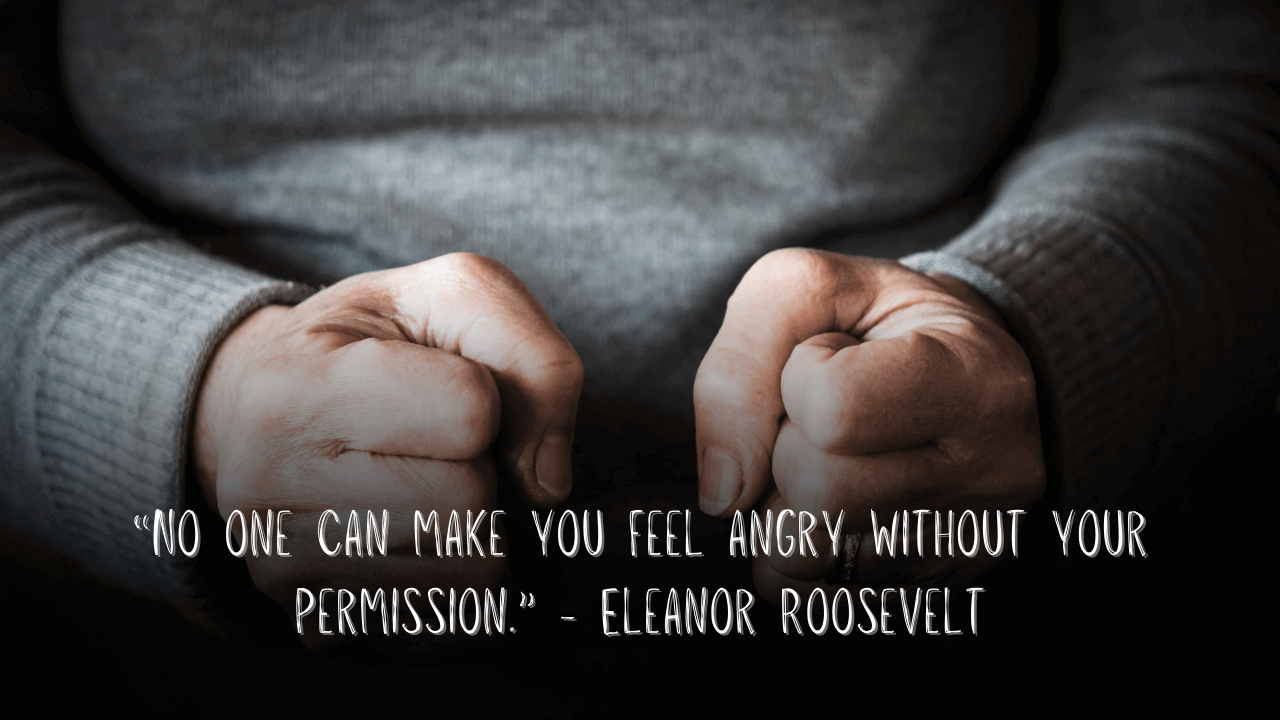
You can?t believe they did it. Of all people, turning on you this way. You want to react in kind, drawing on the anger flowing through you to lash out. Make the other person hurt every bit as much as you do right now.
Wait a minute. You can?t. You?re not that person. You don?t want to BE that person. You?re better than this.
How do you stop anger in its tracks before it gets the best of you?
If you're carrying around a lot of anger, it can feel like it's taking over your life. But there are things you can do to stop anger in its tracks.
In this article, we'll explore 8 techniques that can help you calm down and take back control. With a little practice, these methods can make a big difference in how you manage your anger. So let's get started!
1. Take a Timeout
A timeout involves finding a quiet place to take a break from the conversation or activity that is causing strong emotions and practicing relaxation techniques like deep breathing to help calm the mind.
Timeouts should be short, around 10 minutes, and should not involve activities that may worsen anger, like drinking alcohol.
The goal of a timeout is not to avoid the problem, but to give oneself the time and space to address the issue in a productive manner once emotions are under control.
2. Count to Ten
Counting to ten is a simple yet effective technique for managing anger. It involves taking a momentary distraction from the situation and focusing on taking slow, deep breaths, which can help lower the heart rate and clear the mind.
This technique helps to reset the body and mind and allows for more mindful decision-making, rather than reacting in a rash or aggressive manner. Counting to ten serves as an anchor, reminding us that it is always possible to take a break and approach a situation with a clear head and calmer attitude.
3. Use Mantras
Mantras are brief affirmations or phrases that have a calming effect and can help stay grounded and focused in the face of intense emotions.
Repeating mantras creates a distraction from the emotion-filled situation and allows for the brain to cool down, and enables us to take control of our circumstances by repeating positive affirmations that remind us of our own strength and resilience.
Using mantras in conjunction with physical movements like deep breathing or muscle relaxation techniques can further increase their effectiveness by releasing built-up tension in the body. Incorporating mantras into a self-care routine can also increase optimism and self-esteem over time and lead to more positive outcomes.
4. Take Deep Breaths
Deep breaths encourage a slower heart rate and allow for more oxygen flow through the body, which helps to calm the mind.
They also decrease the production of adrenaline, a hormone that can make us feel agitated, and allow for better diffusion of carbon dioxide from the bloodstream, reducing feelings of anxiety or restlessness. In addition to being calming, deep breathing can also increase focus and clarity, encourage positive thinking, and improve overall mental wellbeing.
It activates the parasympathetic nervous system, which is responsible for calming us down after a stressful situation, helping us remain composed in challenging situations.
To practice deep breathing, focus on taking slow, deliberate breaths, releasing them slowly, and aim for 8-10 seconds per inhale/exhale pair if possible, adjusting to what feels comfortable.
Deep breathing can be an effective tool for managing anger and other intense emotions, and provides an ongoing outlet for stress relief with regular practice.
5. Exercise
Physical activity releases endorphins that reduce stress levels and improve overall emotional wellbeing, and can increase self-esteem and optimism over time.
Cardiovascular activities such as running or swimming boost serotonin levels in the brain, leading to improved mental health and confidence, while strength training activities like lifting weights reduce cortisol levels in the body, providing an outlet for releasing frustration and creating feelings of accomplishment.
Yoga is also beneficial for managing anger, as it provides an opportunity for mindful contemplation, relaxation, and increased awareness of the body and environment, and helps ease tension in the muscles.
Incorporating various forms of exercise into a daily routine can help reduce existing stress and prevent excessive emotion build-up in the future.
6. Listen to Music
Music triggers the release of endorphins and serotonin, which can reduce overall stress levels and provide an outlet for emotional relief.
Listening to calming music, such as ambient music or nature sounds, or classical music, can help bring about relaxation and create structure within chaotic thoughts, allowing for greater clarity amid emotional turmoil.
Engaging in music-related activities like singing or playing an instrument can also provide a distraction from underlying issues, encourage creativity and problem-solving, and give a sense of accomplishment and increased confidence.
Incorporating music into daily life can reduce stress related to anger management, improve sleep quality and concentration, and increase happiness.
7. Talk to Someone
By confiding in another person, we give ourselves permission to express our feelings without judgment and gain greater clarity over our thoughts and emotions, and we can find comfort and support during times of distress.
It is important to find someone who is willing and able to listen without interjecting their own opinions or advice, and a mental health professional can also provide specialized help in navigating complex emotions.
Talking things out can improve self-esteem, relationships, stress levels, and self-awareness, and allow for greater control over emotions with regular practice.
8. Write It Out
Writing out your thoughts and feelings can provides a private outlet for expression without judgment or criticism, helps gain insight into underlying issues, offers perspective on life experiences, improves memory recall, and increases awareness of triggers that could lead to further episodes of anger.
Writing can also help prevent future problems from arising and provide guidance for more positive interactions in the future.
Overall, writing can improve self-reflection skills, increase insight into underlying issues, and allow for greater control over reactions with regular practice.
The key to all of these is simple: don?t let anger take control. The last thing you need is for you to fall under the power of negative emotion. Use the anger to make a better place or let it go entirely. In the end, you?ll be happier.
These are just a few techniques that you can use to stop anger in its tracks. With practice, you can learn how to recognize your triggers and use these strategies to gain control over your emotions for a happier and healthier life.
Good luck!
??